
Understanding Shilling Value Across Different Countries
What is a shilling worth? Using the term "shilling" does not refer to a single, universal type of currency.
Dozens of nations issued this unit, each featuring unique physical traits and varying market power.
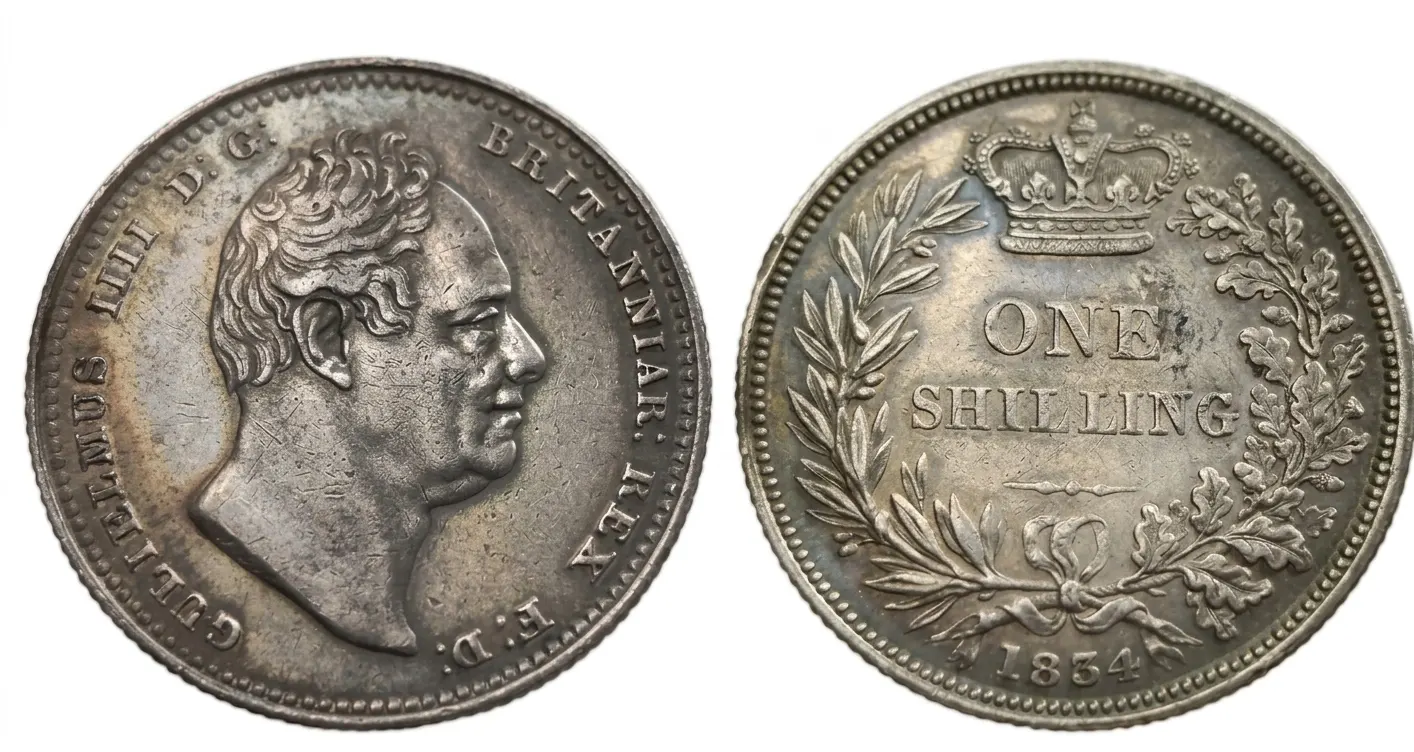
Minting Era | Primary Material | Total Mass | Actual Silver Mass |
1816–1919 | 92.5% Silver | 5.65 grams | 5.23 grams |
1920–1946 | 50% Silver | 5.65 grams | 2.83 grams |
1947–1970 | Copper-Nickel Mix | 5.65 grams | 0.00 grams |
Rare Proof Issues | 92.5% Silver | 5.65 grams | 5.23 grams |
Maintaining a constant 5.65-gram weight allowed these coins to work in vending machines despite changes in metal value.
Adding 25% nickel to later runs provided the hardness needed for decades of active circulation.
Market Pricing for Rare British Issues
Trading floors in 2026 show sustained demand for items graded MS64 or higher.
Standard silver issues see price growth tied closely to the global bullion market.
Recent Auction Statistics:
1819 Shilling (MS65 grade) → $450 → 4% yearly growth.
1905 Shilling (Key Date) → $1,200 → 7.5% yearly growth.
1933 Shilling (Proof strike) → $320 → 2% yearly growth.
Zero wear on the monarch's portrait increases the final hammer price by 300% compared to average items.
Common copper-nickel units from the George VI era typically trade for no more than $2.
East African Shilling: Regional Mechanics
Serving Kenya, Tanganyika, Uganda, and Zanzibar, the East African shilling was a vital colonial tool.
Designs featured a distinct lion imagery while adhering to British technical sizes.
Production Process Logic: Silver blanks (80% pure until 1948) → London Mint striking → Export to African ports.
Release Year | Metal Type | Net Weight | 2026 Market Price |
1921 | 25% Silver | 5.65 grams | $15 |
1948 | Copper-Nickel Mix | 5.65 grams | $5 |
1952 | Copper-Nickel Mix | 5.65 grams | $45 |
Scarcity for the 1952 issue stems from low production numbers during the royal transition in the UK.
Dropping silver purity to 25% in the early 1920s was a direct result of post-war metal shortages.
Austrian Shilling Variations (1924–2001)
Austria utilized the shilling as its main currency until switching to the Euro in 2002.
Technical benchmarks in Austria differed significantly from the British imperial system.
Specs for Aluminum and Silver Units:
1924 Shilling (80% Silver) → Mass: 7.0 grams.
1946 Shilling (Pure Aluminum) → Mass: 2.0 grams.
1959 Shilling (Aluminum-Bronze Mix) → Mass: 4.2 grams.
Perfect specimens of the 1946 aluminum issue currently trade for $60 in 2026.
Using a light 2.0-gram aluminum build served as a temporary fix during the post-war recovery phase.
Scandinavian "Skilling" History
Denmark, Norway, and Sweden utilized the "skilling" until the mid-19th century.
Most examples were struck using copper or low-grade silver known as billon.
Copper Skilling Metrics:
1771 Skilling (Denmark) → Weight: 11.5 grams → Material: Copper.
1842 4-Skilling (Norway) → Weight: 1.45 grams → Material: 25% Silver.
Price Trends for Scandinavian Copper: → 10% annual growth for items retaining original mint luster. → Price stagnation for coins showing signs of environmental corrosion.
Massive production in 1771 keeps the price for an average specimen at roughly $25 in 2026.
Modern Usage in Somalia and Tanzania
Shilling denominations remain active in several African nations as of April 2026.
Circulating coins today contain no precious metals and carry minimal market premiums.
Issuing Nation | Denomination | Material Mix | Coin Weight |
Tanzania | 50 Shillings | Brass-plated Steel | 4.0 grams |
Kenya | 20 Shillings | Bi-metal (Brass/Steel) | 9.0 grams |
Somalia | 100 Shillings | Stainless Steel | 6.0 grams |
Investment value for these standard circulating pieces remains at zero.
Specialized silver coins (99.9% pure) from Somalia are produced exclusively for the international collector market.
Verified Auction Records
Live bidding over the past two years has highlighted several high-value rarities.
Scarcity usually arises from minting errors or extremely limited commemorative runs.
Confirmed Price Records:
1658 English Shilling (Cromwell) → $12,500.
1937 Irish Shilling (Copper-Nickel Prototype) → $18,000.
1793 Bermuda Shilling (Copper) → $6,500.
Prototype Irish shillings from 1937 have seen a 45% value increase over the last five years.
Extreme scarcity exists because authorities destroyed nearly the entire run before it reached the public.
Material Verification Methods
Establishing the value of a shilling is impossible without a coin checker app.
Professional labs in 2026 utilize non-destructive testing to verify authenticity.
Primary Technologies:
X-ray Analysis → identifying copper and nickel ratios without damaging the surface patina.
Gravity Testing → checking density to find lead-based counterfeits.
Laser Scanning → comparing micro-details against known genuine dies.
Shifting more than 0.1 grams from the 5.65-gram standard for a silver shilling suggests a fake.
Tin-based forgeries often display lower density and a distinct dull grey color.
Impact of Preservation on Grade
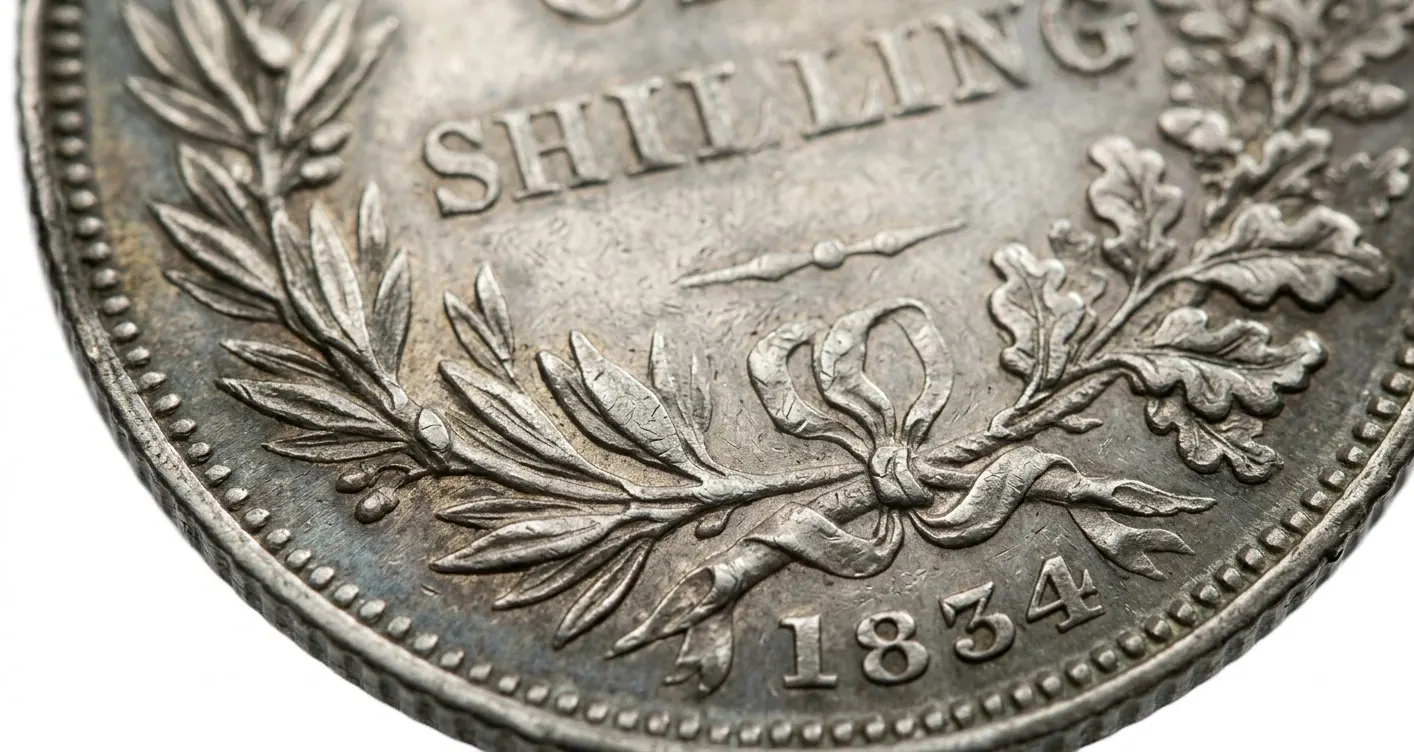
Shilling values drop by 80% if signs of cleaning or mechanical scratches are present.
Experts apply an international scale ranging from 1 to 70 points.
Condition Categories:
G-VG (Good) → Heavy wear; value tied mostly to metal weight.
XF (Extremely Fine) → Light wear; trades at 2x metal value.
MS (Mint State) → Zero wear; trades at 10x to 50x metal value.
Professional grading in sealed holders is now mandatory in 2026 for any coin valued over $100.
Finding a single scratch on the coin field stops the annual value growth immediately.
Geography of the Shilling: Global Issuers
History shows the shilling was issued in over 30 different jurisdictions.
Every region set its own rules for striking and metal purity levels.
Major Past and Present Issuers: → United Kingdom and Ireland. → Australia and New Zealand. → Southern Rhodesia and Nigeria. → Fiji and Bermuda.
Australian shillings weighed 5.65 grams and used 92.5% silver until 1945.
Post-1946 Australian runs switched to 50% silver to lower production costs.
Minting Errors in the Shilling Series
Technical glitches at mint facilities create unique pieces where value ignores metal content.
Market interest in such errors grew by 15% in 2026 compared to the previous year.
Expensive Error Types:
Off-center strike → image shift of 20-50% → Price: $150.
Double Die → doubling of letters or dates → Price: $300.
Wrong Planchet → struck on a 6-pence blank → Price: $800.
Weight for a "wrong planchet" error will differ from the standard 5.65 grams.
Verifying these lots requires high-precision digital scales.
Storage Standards for Metal Assets
Preserving the surface of a shilling directly impacts its future resale price.
Oxidation of copper or nickel components can cause permanent staining.
2026 Storage Protocols:
Use inert plastic capsules.
Regular use of the free coin value checker app
Avoid contact with paper containing sulfur.
Maintain a constant storage temperature of 20 degrees Celsius.
Developing a black film on 92.5% silver is a natural patina process.
Cleaning such patina using chemicals strips 50% of the coin's numismatic value.